Best fit complements the Machining Transformation
With its Best fit Portfolio (BX), DMG MORI is expanding its machine portfolio within the Machining Transformation (MX) initiative. These machines, equipped to meet specific needs, provide cost-effective manufacturing capabilities for a variety of turning and milling tasks and complement the portfolio for highly integrated, automated, and digitally supported production processes. This provides customers with tailored performance profiles, ranging from efficient standard production to complex process integration.
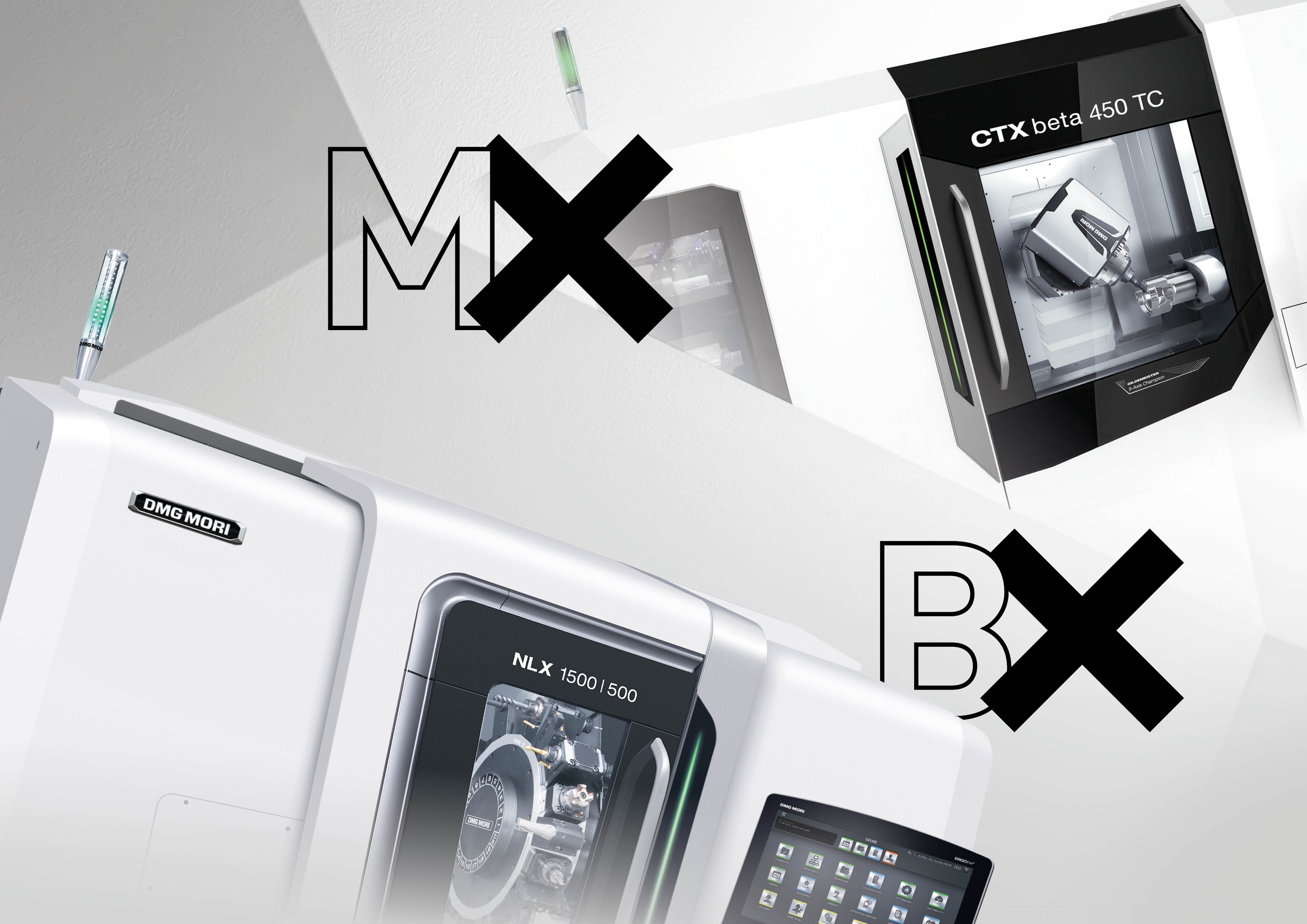
BX stands for task-oriented, reliable, and productive manufacturing capacity with clearly defined processes. Advanced MX machine solutions open up additional possibilities for complex workpieces, high product variety, and sophisticated process integration. Automation and Digital Transformation (DX), along with the Green Transformation (GX), are key pillars of the Machining Transformation. Depending on the machine model and manufacturing requirements, these capabilities can already be utilized with BX and further expanded within the MX portfolio.
However, the decision as to which solution makes economic sense is not based solely on machine performance. While a “best-fit” machine can perform recurring tasks with a needs-based level of technology, highly integrated machines make it possible to combine multiple machining steps into a single setup, thereby eliminating the need for additional setups, machine changes, and handoffs. The key factor is the value added to the entire manufacturing process.
“Machining Transformation means providing exactly the machine capabilities for each task that are technically necessary and economically viable,” says Dr. Harald Neun, Managing Director of DMG MORI EMEA Holding GmbH. “With Best fit, we’re expanding our range of solutions to include efficient capacities for standardized processes. BX and MX go hand in hand: They enable our customers to tailor their machine fleet to their mix of parts, process requirements, and production organization.”
Wide Range of Applications

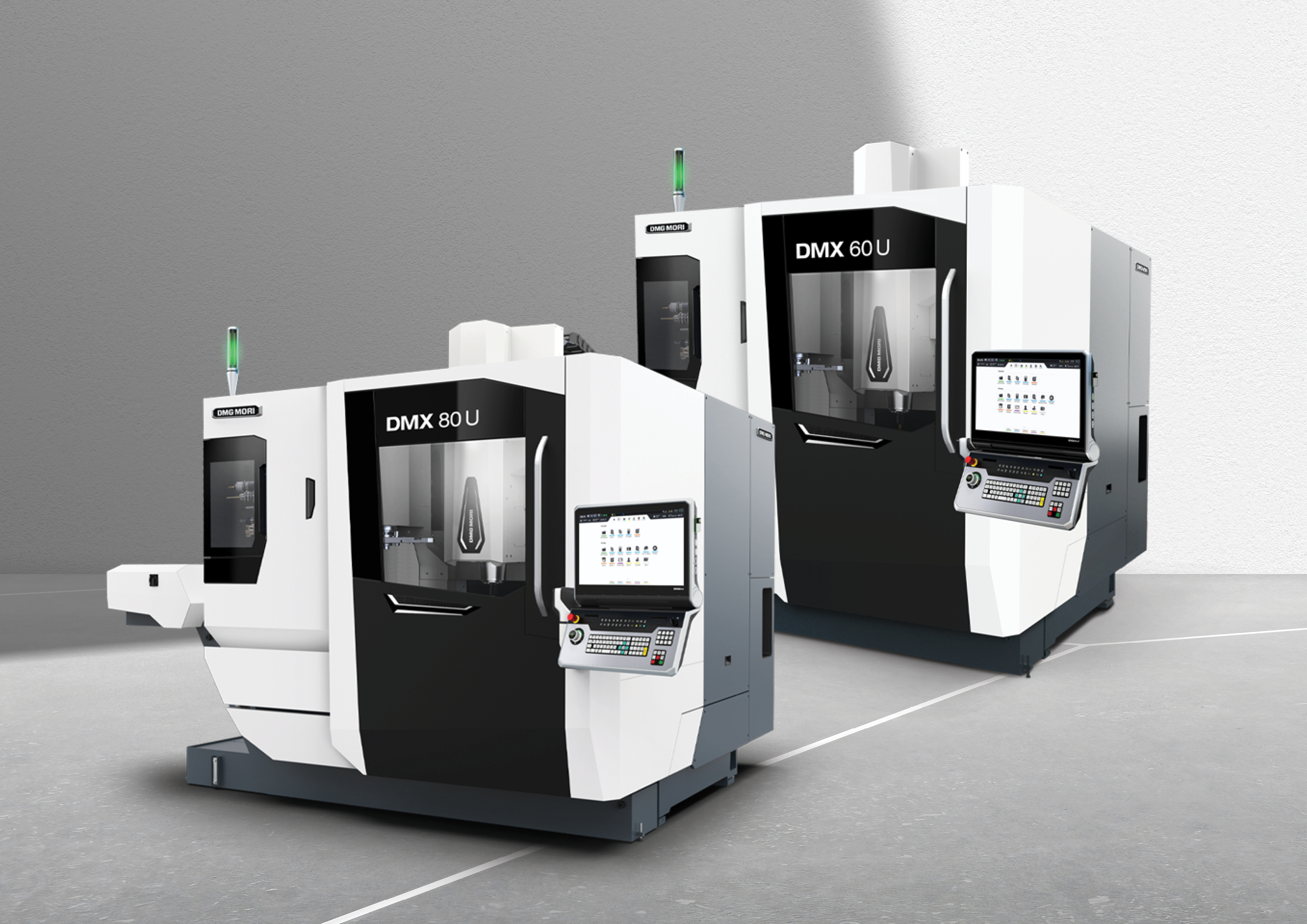
The Best fit portfolio includes solutions for universal turning, turn-mill machining, vertical and horizontal milling, and 5-axis milling. This includes, among others, machines from the CLX, NLX, ALX, CLX TC, CMX V, NVX, DMV, NHC, NHX, and DMX series. They combine a basic configuration tailored to specific needs, a manageable range of variants, high reliability, and quick operational readiness.
With BX, it’s not a matter of customer size or industry. Even technologically sophisticated manufacturing operations regularly process standard parts with consistent machining sequences alongside complex workpieces. Best fit machines can handle such tasks and create additional cost-effective capacity. This allows manufacturing tasks to be distributed more strategically across different machines, while highly integrated MX solutions remain available for jobs where their specialized technological capabilities offer significant added value.
Using Automation to Meet Your Needs
Best fit machines can be used both as stand-alone machines and as automated manufacturing solutions. For example, a CLX 450 TC can be combined with Robo2Go. For the DMV 60, the PH Cell is available for automated pallet handling; in horizontal milling, the CPP and LPP offer suitable automation options for the NHC 6300. This allows manufacturing companies to build automated capacity even with BX machines. The key factor is the concrete benefit: automation must align with the part and process profile and, in particular, enable longer unmanned running times, a more stable part flow, or higher machine utilization.
Growing Along with the Demands

Best fit opens up a variety of options for further developing manufacturing to meet operational requirements. DMG MORI describes this approach as Easy Start, Grow, and Scale. Customers can start with a BX configuration tailored to their current machining task and gradually expand it depending on the machine model, part mix, and production organization.
Selected BX machines are designed as "CELOS X Prepared." This means they are prepared for future expansion; however, the full range of CELOS X features is not automatically available from the start. Depending on the model and configuration, CELOS X as well as connectivity and monitoring features can be added as needed. Additional technology cycles, peripherals, and automation solutions also provide further expansion options.
Further development is not limited to new machines. With Automation Retrofit, DMG MORI also enables automation solutions to be retrofitted to technically compatible existing machines. This allows manufacturing companies to make better use of existing machine capacity and maximize investments they have already made, without necessarily having to purchase an additional machine tool. Which retrofits are possible and economically viable depends on the specific machine, its configuration, and the manufacturing task at hand.
Development can take place within a machine family or lead to a more advanced MX solution. With the CLX 450 TC, for example, the spectrum ranges from additional technology cycles via CELOS X to automation with Robo2Go. As requirements for performance, process integration, and automation increase, the CTX beta 450 TC opens up further possibilities, such as with MATRIS. Comparable development prospects exist in milling, from the DMV 60 to the DMU 50, as well as in horizontal milling, from the NHC 6300 to the INH 63.
“Our mission is to provide our customers with a broad, well-coordinated portfolio of machines and solutions, ranging from cost-effective standard production to highly integrated manufacturing,” said Dr. Neun. “With Best fit, we’re expanding our ability to implement our Machining Transformation in line with our customers’ requirements. What matters most is not maximum machine performance, but rather the economic contribution the technology makes to the specific manufacturing task and to overall production.”
An automated BX machine can be the right long-term solution. It can also complement existing MX machines or those added later. The key factor remains how machining tasks, batch sizes, capacity requirements, and production organization evolve